

This is a common site in New York. Parked and double parked vehicles funnel traffic into one or two lanes, resulting in delays, honking and dangerous driving. (Click here to see the YouTube video from which this screenshot was taken.)
This is how wide Madison Avenue is without all of those parked cars clogging it up:
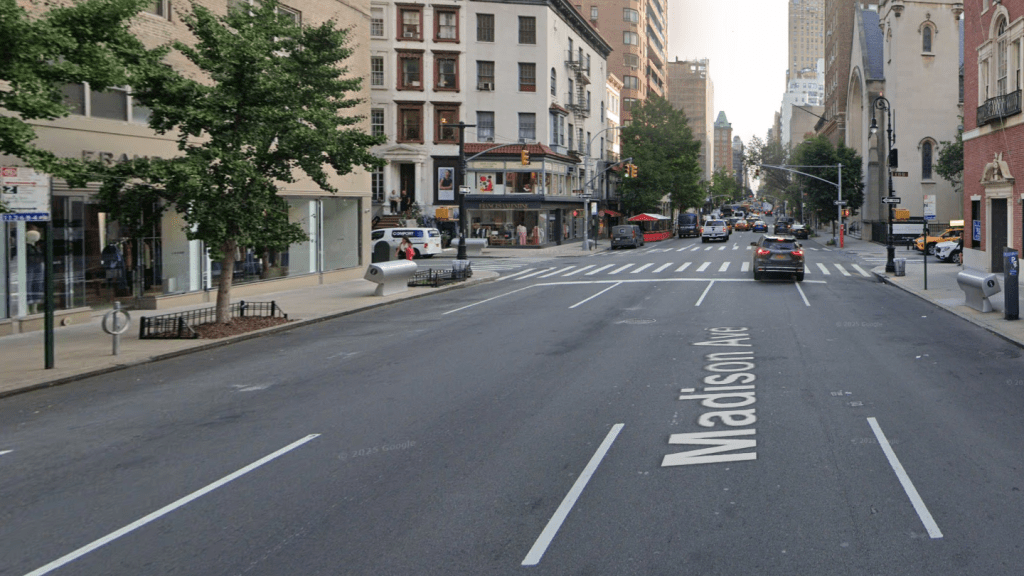
The problem is that there are simply too many cars on our streets, both moving and parked. To be sure, there are situations in which people may need to travel by car, but fewer would do so if we offered better alternatives. Buses have several disadvantages. First, they are slow because they make frequent stops. Second, they often come infrequently. And third, you have to walk or take multiple buses if your trip doesn’t happen to conform well to any bus’s route. There is an alternative that would be faster, cheaper and more convenient: autonomous minibuses.
Autonomous driving technology is ready for prime time. Waymo’s autonomous taxis are already operational in Phoenix, San Francisco, Los Angeles, Silicon Valley and Austin, and, according to a new peer reviewed study, its vehicles are much safer than human drivers. They cause 92% fewer pedestrian injuries, 82% fewer cyclist injuries, 82% fewer motorcyclist injuries, and 96% fewer vehicle-to-vehicle accidents.
Companies are already apply autonomous driving technology to minibuses like these that are being tested in Barcelona …
.. and that are already in regular use in China:
Here is what Madison Avenue would look like at rush hour if we replaced individual vehicles with autonomous minibuses:

This picture shows seven buses per block. These seven busses could hold 70 seated passengers. Since taxis carry 1.4 passengers on average, that’s as many passengers as 45 taxis would typically hold. That many taxis fill up a block of a New York City avenue.

That’s because a minibus that can hold 10 passengers is virtually the same size as a taxi:
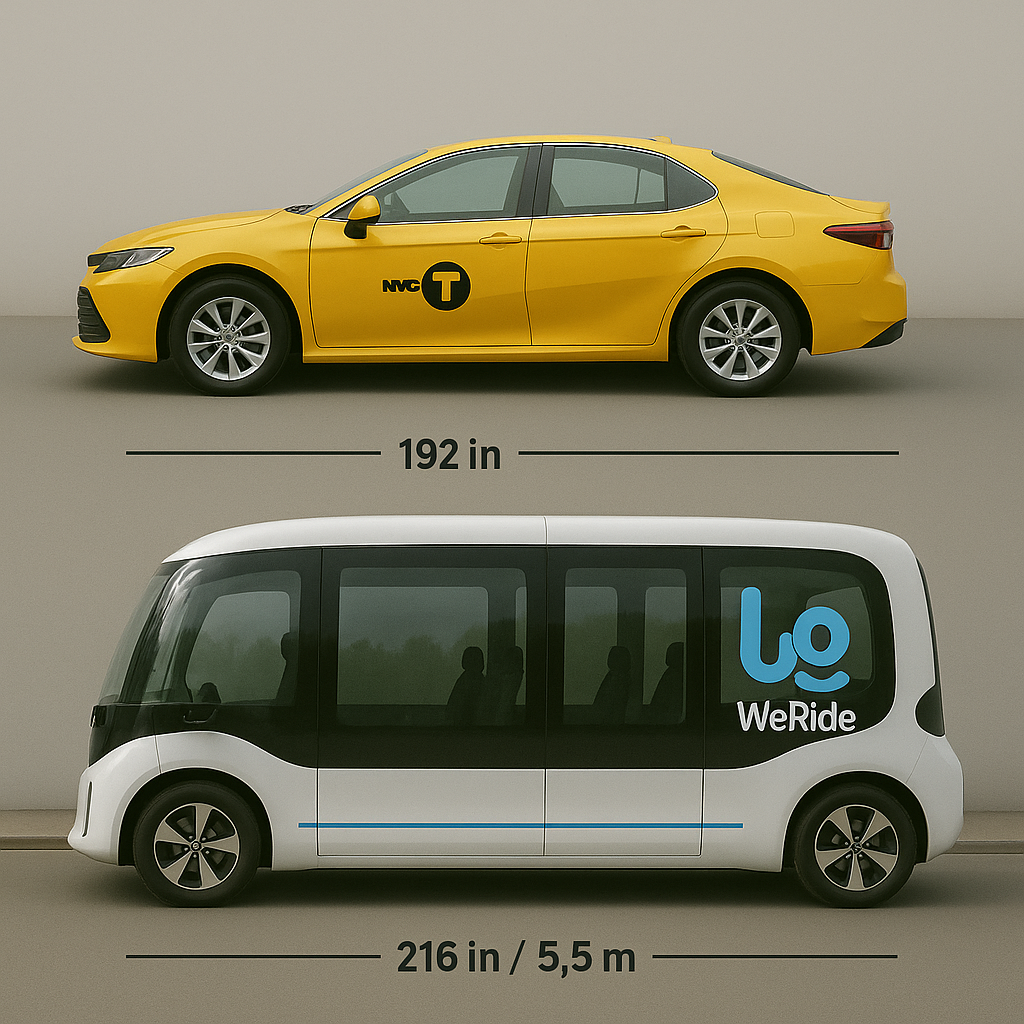
Autonomous minibuses would be more convenient than full sized buses. Full size buses are slowed down by the need to make frequent stops spending a long time at stops where many passengers need to get on or off the bus. Since minibuses have fewer riders, they would make need to make fewer stops. In fact, they could use “destination dispatch,” a technology that has improved elevator efficiency.
With destination dispatch elevators, a person arriving at an an elevator bank enters their destination floor on a keypad and is assigned an elevator:

This system is more efficient because it allows people to be grouped by destination. Everyone going to floor 22 will be assigned to elevator C, while everyone going to, say, floor 27, will be assigned to elevator D. This ensures that these elevators make as few stops as possible.
We could use the same system for minibuses. You’d indicate where you want to go on your mobile phone and you’d be told which bus to take:
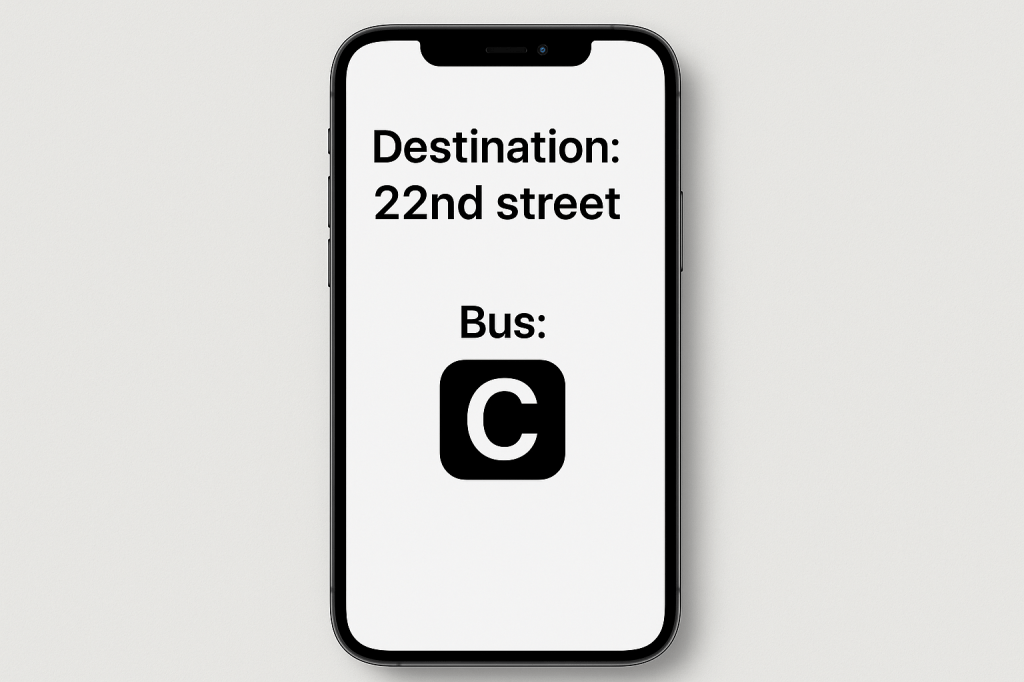
Then you would wait for your bus with a C in the window.
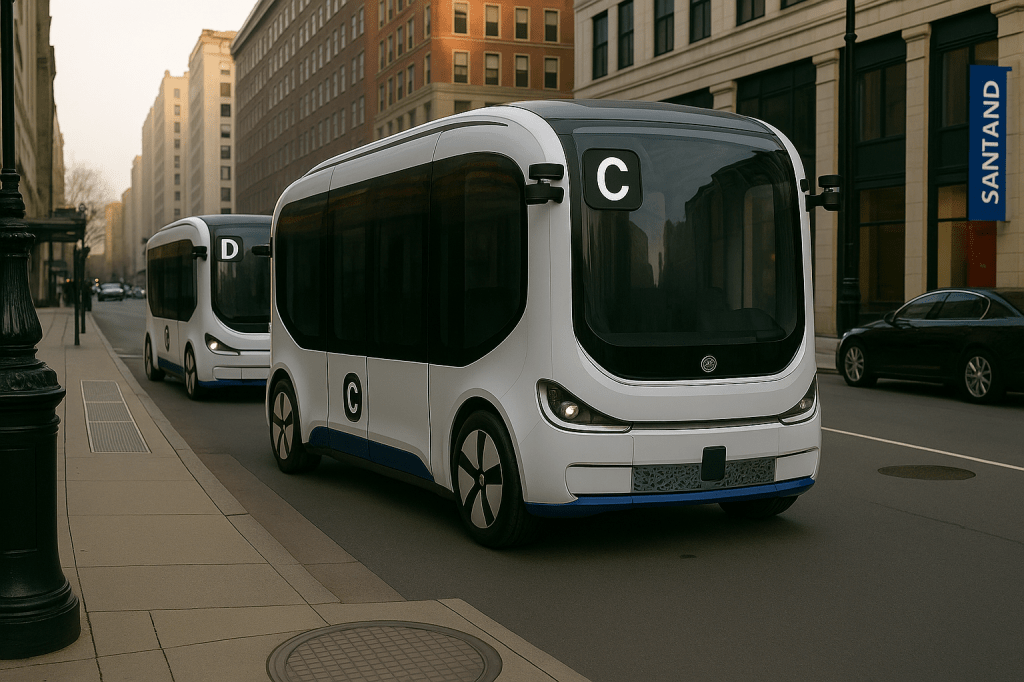
Keep in mind that several buses will be driving by every minute so you won’t have to wait long. And the benefit is that your bus may only make a couple of stops along the way to your destination since will be assigned to a bus that is already stopping at your destination.
Imagine how quickly you will get to your destination if your bus only stops a couple of times en route and there is no traffic. Moreover, we could have bus stops on every block rather than every other block. For that matter, we would have busses on every street. If you wanted to travel from 1st avenue and 62 Street to 89th and Park, you would take a bus on 1st avenue to 89th street and on 89th street to Park.
With transportation that is fast, cheap and convenient, few people will want to own cars so we can get them off our streets. We are so accustomed to having cars parked on our streets that we don’t realize how much of a burden they are on our streets. Here is what 74th street off of Broadway looks like now:
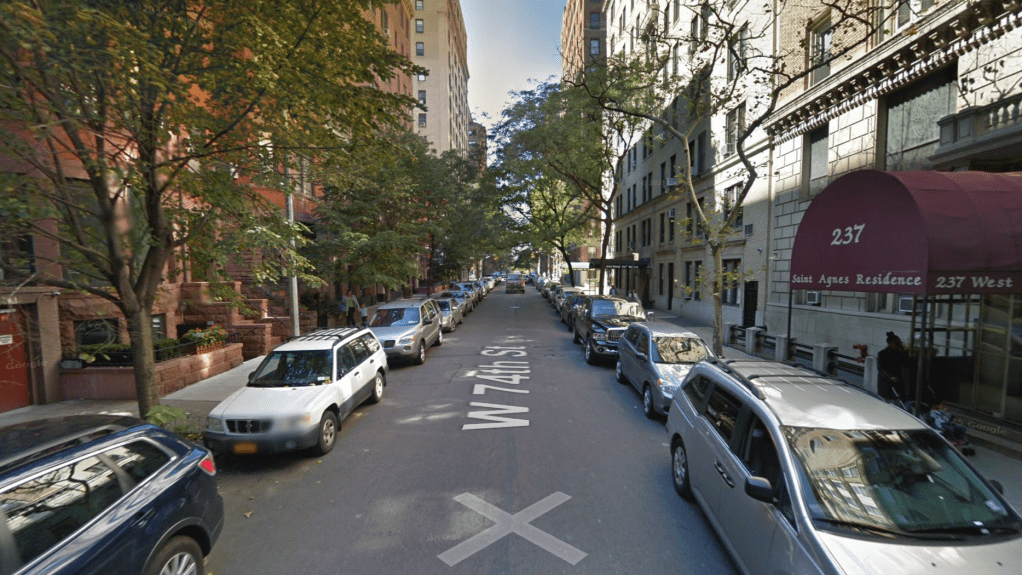
Here is what it might look like without cars:

This isn’t a fantasy but a very realistic scenario that we could achieve with technology that already exists.
 Reimagining NYC