
Highways. Inefficient. Polluting. If only we’d invested more in railroads like most European countries. All good points—until now. Because roads, the dinosaurs of transportation, are about to become its future.
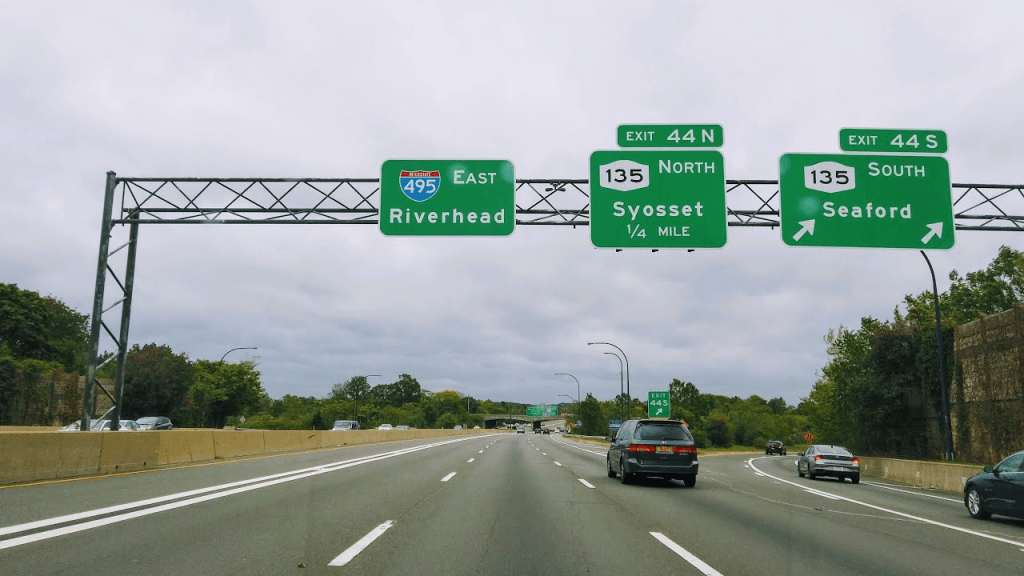
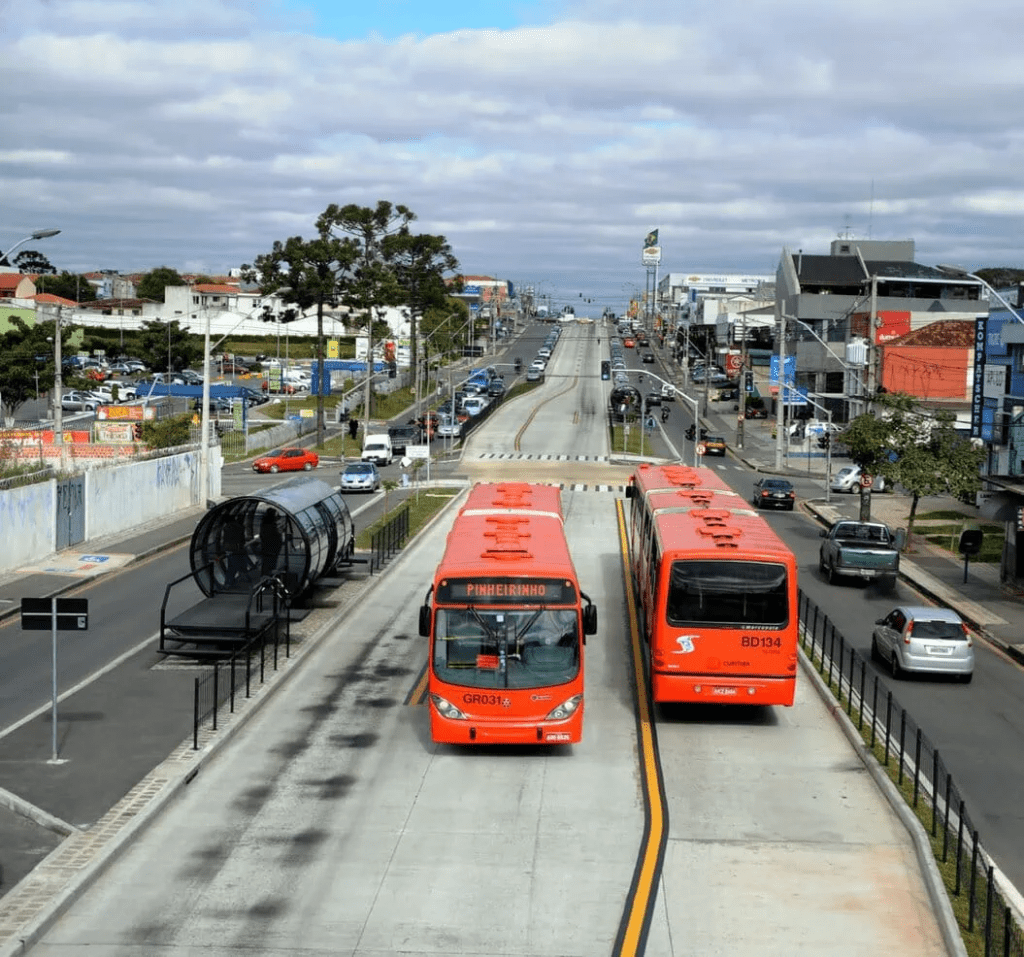
In the 1970s, Curitiba, Brazil became the first city to develop a system of bus rapid transit (BRT). BRT is the bus equivalent of light rail. Buses are separated from other traffic to protect them from congestion, which essentially transforms them into trains with rubber wheels.
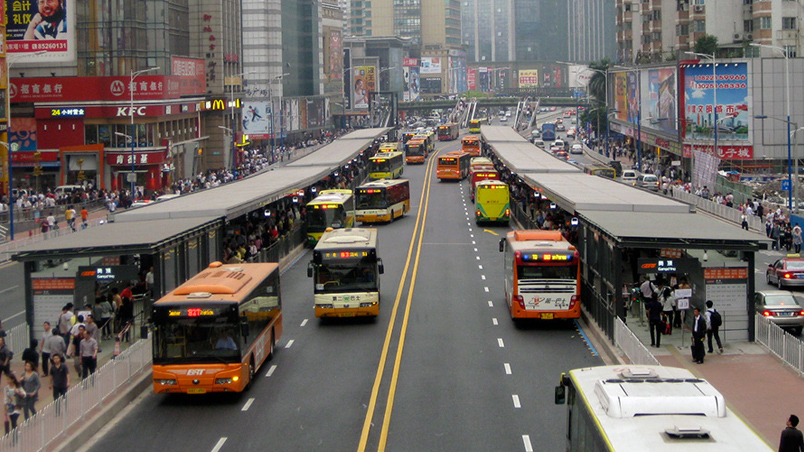
BRT has spread to many cities around the world including Guangzhou China where buses carry 800,000 passengers per day.
BRT systems can be built for a fraction of the cost of light rail. And with modern technology, we can create BRT systems for virtually nothing.
The fundamental insight of BRT is that the problem with highways isn’t the highways themselves but rather what’s on them: too many individual cars that use up a lot of space per passenger and therefore cause congestion. If we protect buses from congestion, they can be just as efficient as commuter trains, which rarely exceed highway speeds. But rather than use the blunt instrument of separating buses from cars, we can achieve the same effect by combining buses with congestion pricing. And rather than use full size buses, we could use autonomous minibuses to allow for more individualized routes.
A minibus that is hardly larger than a car can transport 10 people:
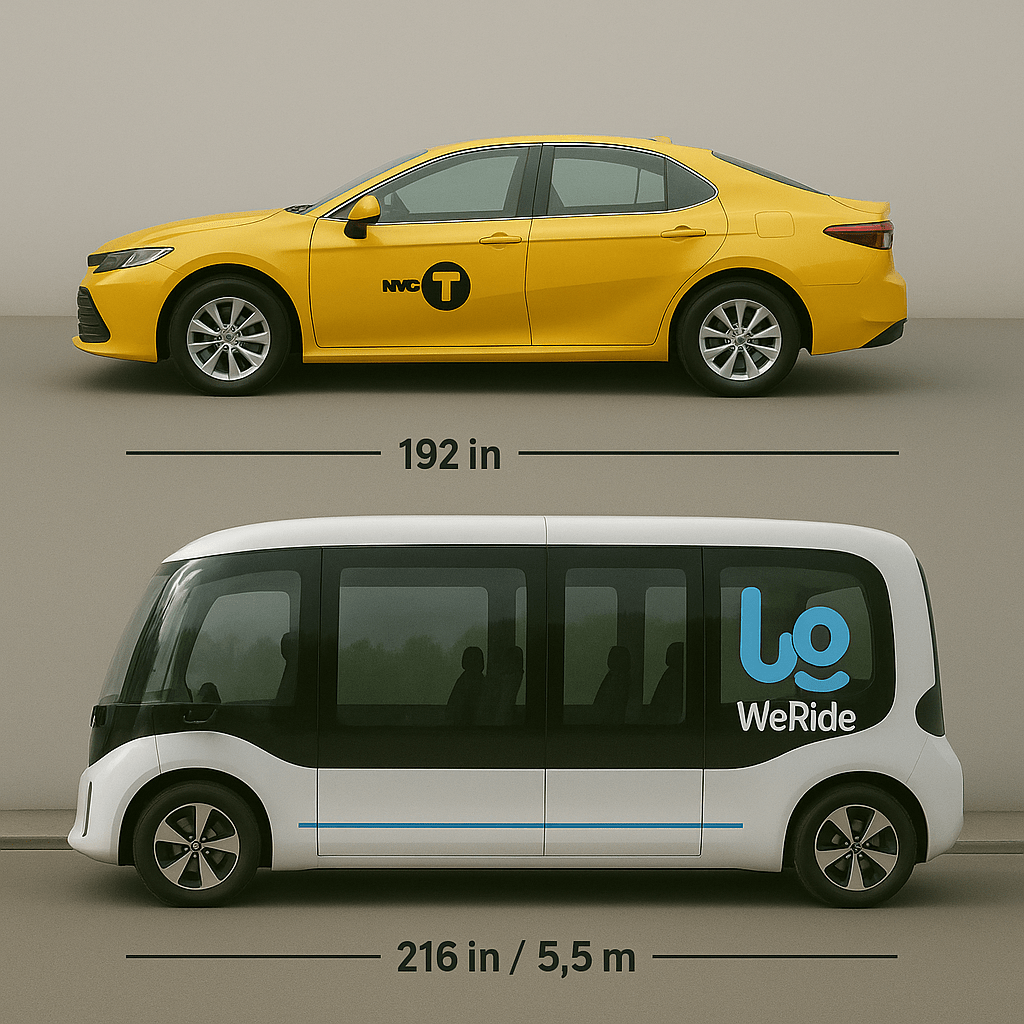
Since most cars typically have one or two passengers, each minibus could replace six cars. That means that a traffic jam on the Long Island Expressway like this…
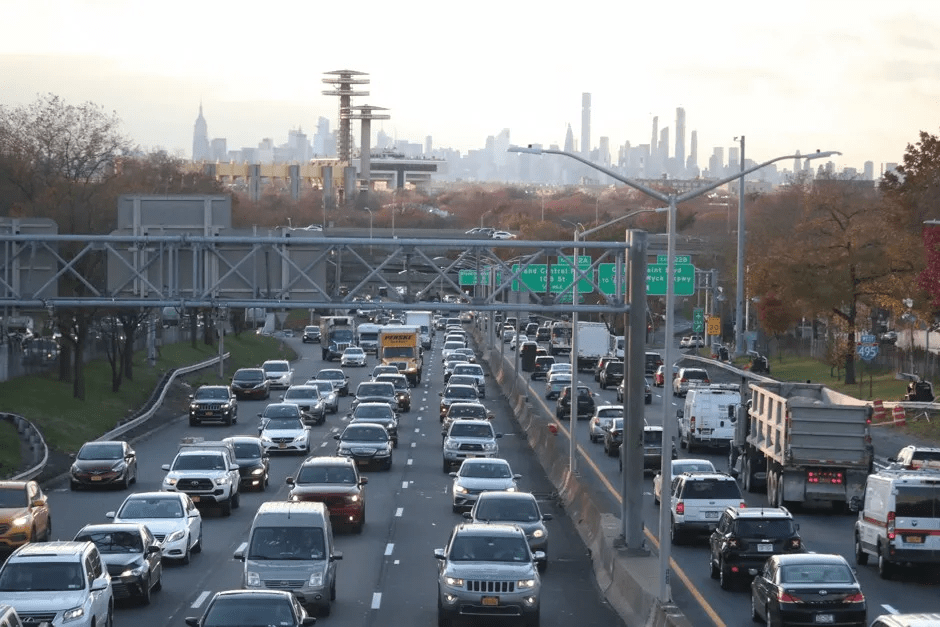
… would turn into freely flowing traffic like this:
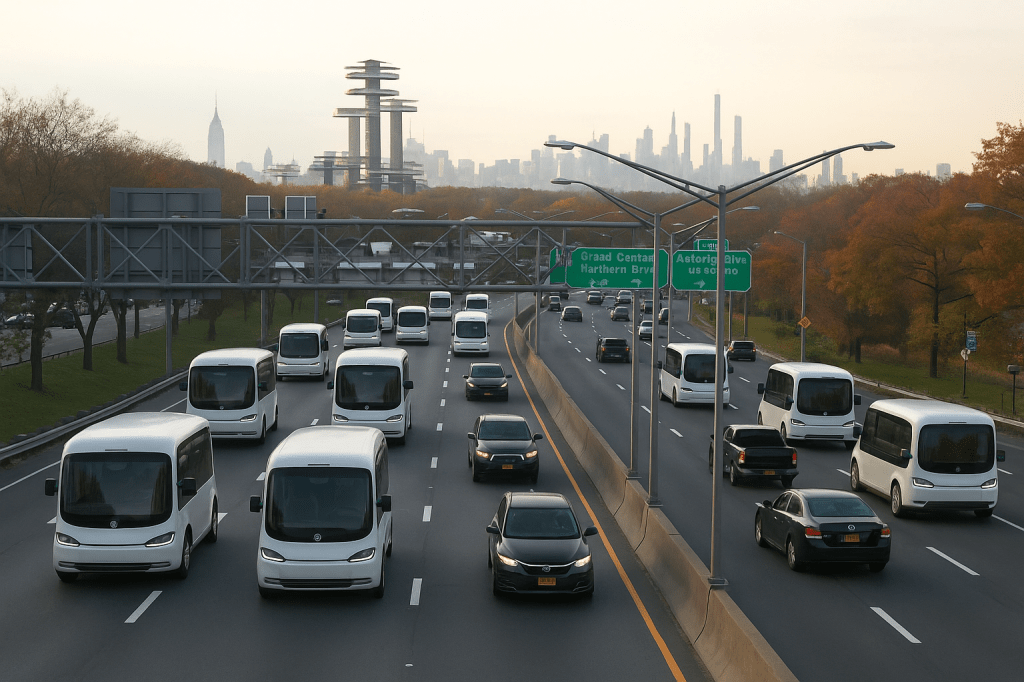
These minibuses wouldn’t replace our existing commuter trains but rather supplement them. Take trips to LaGuardia airport. Currently, there is no rail option to this airport. One was proposed several years ago but it was ultimately abandoned after an expert report concluded it wouldn’t be worth the $6 billion it would have cost to build.
Many people take a ride hailing service to LaGuardia but it is both costly and time consuming. At the busiest periods of the day, driving from Times Square to LaGuardia can take almost an hour. At 5:00 AM, however, it only takes only 23 minutes:
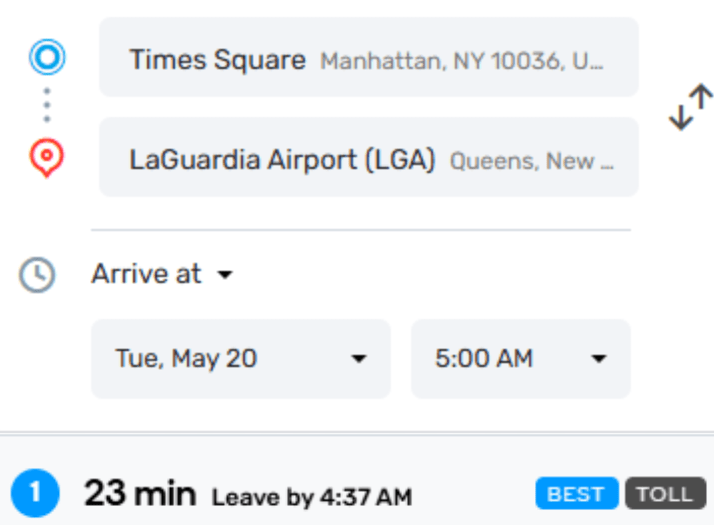
In other words, driving to LaGuardia is quite efficient as long as we get rid of congestion, which we can do with a combination of the stick of congestion pricing and the carrot of convenient minibuses. Minibuses could leave every 10 minutes throughout the city at various locations such as every subway stop in midtown Manhattan. Unlike conventional buses, the minibuses wouldn’t need to make multiple stops to fill up. Instead, they would make one or at most two stops and then head straight to the airport.
And there are other ways that minibuses could complement our existing modes of public transport. If you live in Melville, then after you get off the train Hicksville, you still have a 10 mile ride, which can take nearly a half hour at rush hour.
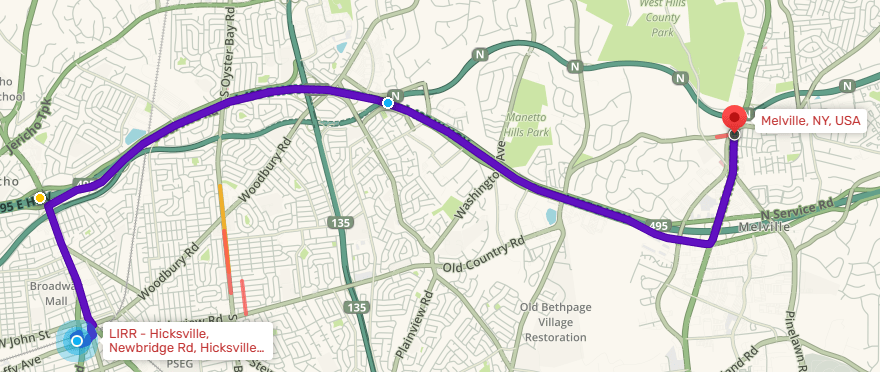
Moreover, there is also navigating the parking lot. It can take up to eight minutes to walk to one of the Ronkonkoma stations 5,542 parking spots:
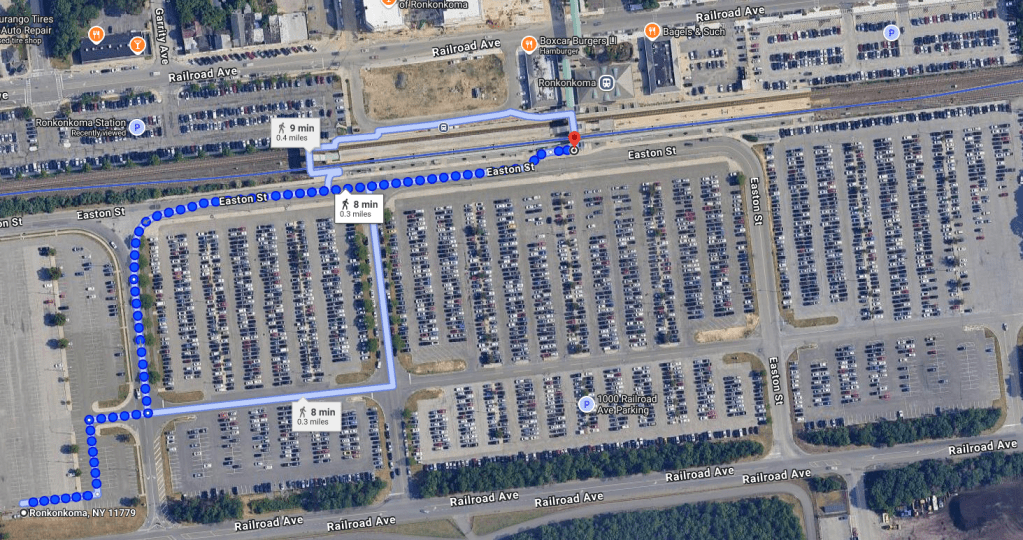
Moreover, the parking lots at some LIRR stations are so crowded that when you arrive in the morning, you can spend up to a half hour just looking for a parking spot!
In addition to being inconvenient, driving a car contributes to congestion.
For all of these reasons, a better solution would be small autonomous vehicles like this to take passengers from trains to their homes.
Although these vehicles are currently being tested in cities, they are designed to travel at speeds of up to 75 miles per hour.
A smaller vehicle like this is more appropriate since filling up a 10 seat minibus would require making ten stops to let passengers off. To be sure, there is some convenience in having even a few stops, but getting out of a vehicle like a Zoox is faster than getting off a bus or the back seat of a shared ride:
And once we have better transportation for the last few miles of these trips, we might then be able to speed up commuter trains by having fewer stops. Every time a train stops, it adds several minutes to the trip since the train must decelerate, let passengers on and off, and then accelerate back to its normal speed. Most branches of the LIRR have more than 10 stops so these delays add up.
Take this section of the Long Island Railroad where there are four stations just 1.6 miles apart.
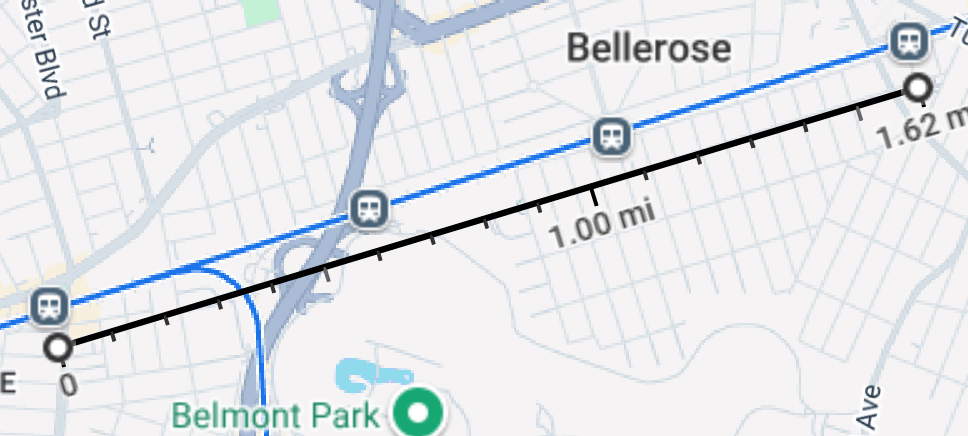
We could have just one stop instead if we had an efficient method for taking customers the rest of the way home. Throughout the system, we could cut the number of stops in half and rely on minibuses to take passengers the rest of the way.
Autonomous vehicles are no longer some technological fantasy. In the United States alone, autonomous vehicles are operating in a dozen cities. Collectively, autonomous vehicles have driven 70 million miles, the equivalent of 293 round trips to the moon. And Waymo’s self driving technology shows that it drives far more safely than humans. So its time to take our old fashioned roads and put them to much better use.

